Quick Facts
- Where: Kanha National Park, Madhya Pradesh (Kisli/Mukki gate area)
- When we went: 15–18 March 2014 (Holi long weekend)
- Ideal duration: 3 nights / 3 safaris minimum
- Getting there: Nagpur, Raipur, Jabalpur or Bhopal airport, all 3–5 hrs by road; or overnight train to Nagpur
- Best for: Families and friend groups with young kids; first-time safari-goers
- Budget level: Mid-to-luxury jungle lodges (₹8,000–₹35,000+ per night depending on property)
Our group of friends wanted a short trip from Mumbai that would be different (and genuinely memorable) for the kids, then all under seven. Not another resort holiday by a pool, but something with a bit of wonder built in. India’s wildlife is extraordinarily varied, but most people’s idea of a safari here begins and ends with one animal: the tiger. We decided a jungle break would be equal parts adventure for the kids and a proper reset from city life for the rest of us.
Nagpur is the gateway to several of Central India’s finest parks, and from there Tadoba, Pench and Kanha are all realistic weekend options. Ranthambore works well too if you’re flying from Delhi. Bandhavgarh is often called the best of the lot for tiger sightings, but between the travel time to get there and back, it wasn’t going to fit into three days. After some research, Kanha won out, and looking back, it was the right call to start the series here.
Getting There
Kanha has a real geographic advantage that a lot of first-time visitors don’t realise until they start planning: it’s within striking distance of four different airports (Nagpur, Raipur, Jabalpur and Bhopal) each roughly 3 to 5 hours away by road. That flexibility alone makes it easier to plan around than parks with a single access point.
We chose to travel differently on the way in. We took the overnight train from CSMT (Victoria Terminus), Mumbai, departing Friday evening, 14th March 2014, arriving into Nagpur the next morning between 6 and 8 AM. This was a deliberate choice: train journeys with large family groups used to be routine for us as kids, and they’ve become a rarity now that flights are so cheap and convenient. We wanted our own children to have that experience: the shared berths, the chai at odd stations, the sense of a journey rather than just a transfer. It’s a small thing, but it’s stayed with all of us.
A pre-arranged transfer met us at Nagpur station for the roughly 4-hour drive to the lodge. The roads were a mixed bag (some smooth stretches, some potholed), average by Indian highway standards, nothing that should put you off. We reached in time for lunch.
Safari Permits: How the Rules Have Changed
Booking safaris in India is a genuinely tricky business, and the rules seem to shift every few years. Today, permits open online 60 to 120 days in advance, and every passenger’s name and government ID must be submitted at the time of booking: no changes allowed afterward. Back in 2014, it was far more flexible: only the lead booking name was mandatory, and other names could be added later. That flexibility is exactly what saved this trip.
We planned this one quite last minute, over the Holi long weekend, and every safari slot at Kanha was already full by the time we started calling around. Kanha Earth Lodge was the only property willing to work something out: they had three safaris already booked under one of their staff naturalists’ names, and were able to add our group onto that roster. It wasn’t the smoothest start, but it’s exactly the kind of workaround that was still possible under the older system. If you’re planning a trip today, book as early as the window allows: the current rules leave far less room for last-minute rescues like ours.
Do check current park rules before you book, since they really do change often: including gate-wise vehicle limits, ID requirements, and how many names can later be added.
Where to Stay
Kanha offers a genuinely wide spread of accommodation: everything from budget homestays to some of the finest luxury lodges in the country. Where you stay should be decided after you know which gate your safari permits are for; mismatching the two just adds unnecessary driving and hassle.
We stayed at the Kanha Earth Lodge, run by Pugdundee Safaris, near the Kisli Gate. It’s a small, intimate property: just 12 cottages built from stone and wood, each with a wide verandah facing the forest. We had three cottages, tucked away in a quieter corner of the property, which felt private and peaceful. The lounge and library area, stocked with books on Indian wildlife, became a natural gathering spot in the evenings, and the naturalists were always around before dinner, happily fielding every question the kids threw at them. The infinity pool overlooking the Mahua trees is a genuinely lovely spot to unwind after a game drive.
Meals were included as part of our package: standard practice at safari lodges, since there’s little to no option to eat outside the property. The food was well above average: familiar Indian fare with continental and Chinese options thrown into the buffet, and the packed breakfasts for the safaris were thoughtfully put together.
Alternatives near the Kisli Gate: Kipling Camp and Tuli Tiger, both with strong reputations.
Near Mukki Gate: if you want to go all out, Banjaar Tola, A Taj Safari (set right on the banks of the Banjaar River) is the most curated, luxurious experience among Kanha’s properties, a clear notch above the rest in terms of design and exclusivity. Chitvan Resort is a solid, less extravagant option in the same area.
We’d happily recommend Pugdundee Safaris without reservation: professional, warm, and clearly experienced across multiple parks.


Day 1: Settling In
We arrived just before lunch and spent the rest of the day simply enjoying the lodge itself: no safari booked. This turned out to be a good decision rather than an oversight; arriving after a night train and a long drive, a slow first day let everyone properly settle in. The lodge sits deep in the buffer zone, and the setting does the work for you: dense forest right up to the cottages, none of the manicured “resort” feel you get elsewhere. It felt like a proper jungle stay from the moment we arrived.


Day 2: Two Safaris, No Tiger, No Complaints
Because Day 3 fell on Holi (when the park closes entirely), we had both a morning and an evening safari on the same day, with a third and final safari booked for the morning we were due to check out.
Safaris in Kanha start early: properly early. We were up for tea, coffee and biscuits at 5:30 AM before heading out, with a proper packed breakfast eaten mid-drive at a designated stop inside the park. It’s a lovely little ritual: flasks and tiffins laid out in a clearing, everyone comparing notes on what they’d spotted so far.
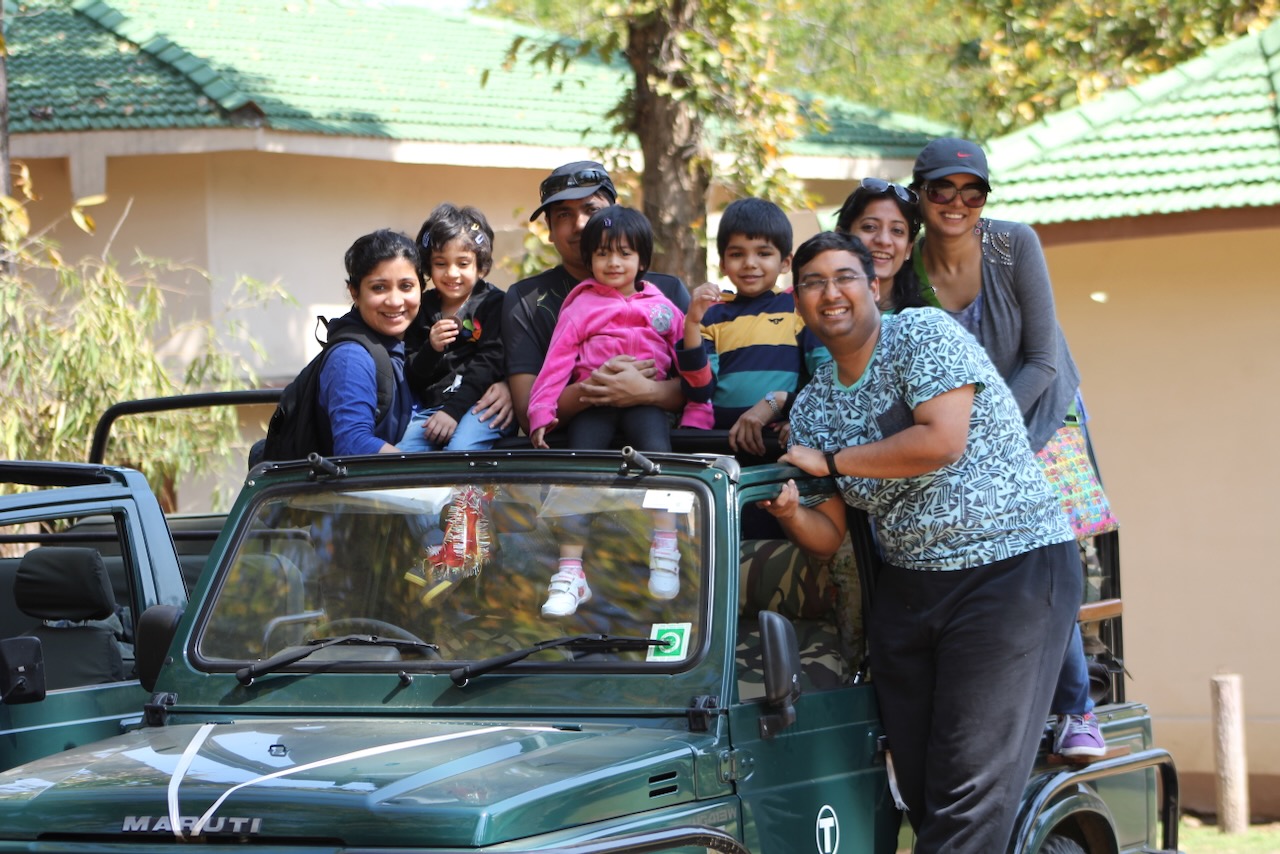
The whole group (five adults and three children, all under six and therefore not counted against the jeep’s passenger limit) fit comfortably into a single gypsy. We came back for lunch, napped through the worst of the afternoon heat, and went out again for the evening drive.
Kanha’s forest genuinely surprised us. It isn’t the open savannah look you might expect from safari documentaries; it’s dense, deeply green, and has a “proper jungle” atmosphere that, having since done Pench, Tadoba, and Kabini as well, I’d still rank as the most beautiful of the lot. The light changes the whole experience across the day: mornings feel fresh and cool, evenings bring long shadows and proper sunsets over the tree line.
Across both drives we saw deer, peacocks, a good variety of birds, and elephants, but no tiger. We didn’t mind. It was all of our first safari, and there was more than enough to be enthralled by.


Day 3: Holi at the Lodge
March 17th was Holi, and the park closes entirely for the festival, so this became a full rest day. The lodge has a lovely pool, and the kids got in a bit of gentle colour play around it before everyone settled into a properly lazy day: swimming, lunch, an afternoon of doing very little, and dinner at the lodge. After two long safari days, it was exactly the kind of pause the trip needed, and the pool and food both held up well through it.


Day 4: One Last Safari
We went out for our third and final safari on the morning of the 18th, very similar in shape to the one two days earlier. If anything, the disappointment of no tiger sighting stung a touch more this time, simply because it was our last chance on this trip. But it didn’t take away from how satisfied we were with the overall experience; we left already resolved to come back and continue the search elsewhere.

We checked out after the safari, drove back to Nagpur, and took an evening flight home to Mumbai, timed as always so the kids would be back in time for school the next day.
More Than Just the Tiger
If I’m honest, the biggest win of this trip wasn’t a wildlife sighting at all; it was the group itself. This was the first of what became a running tradition: the same friends, coming back together for jungle trips, kids growing up alongside each other through shared train rides, early safari mornings, and Holi afternoons by a pool in the middle of a forest. Those are the memories that actually stick, for the kids as much as for us.


We came home without a tiger sighting, but with a very clear resolve: we would be back. That resolve took us next to Pench National Park, and then, eventually, to a trip where the quest finally paid off. More on both of those soon.
#KanhaNationalPark #IndianSafari #TigerSafariIndia #IncredibleIndia #MadhyaPradeshTourism #PugdundeeSafaris #KanhaEarthLodge #JungleWithKids #QuestForTheTiger #WildlifeIndia #FamilyTravelIndia #IndianJungleSafari
Leave a Reply