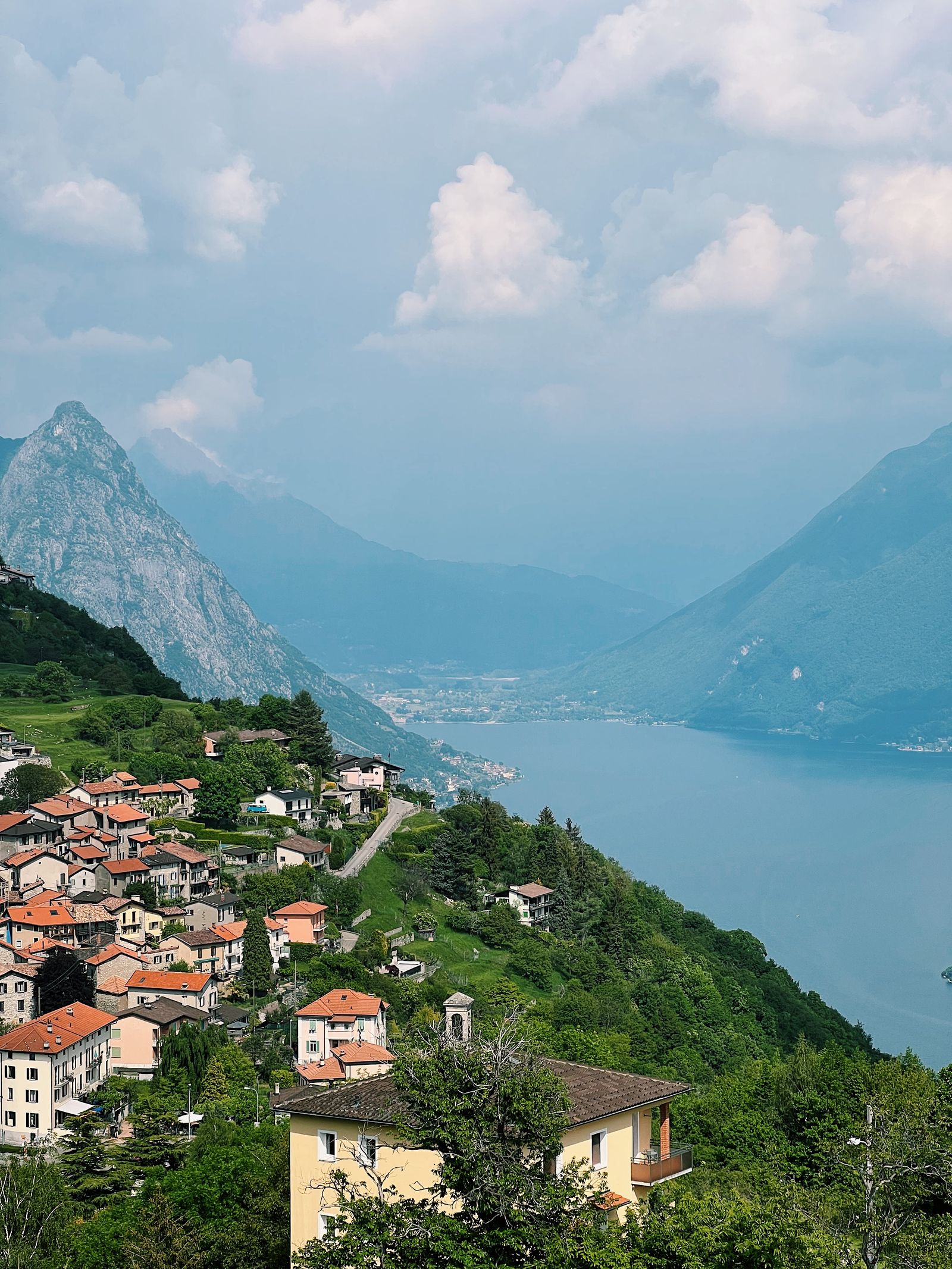
Switzerland is my favourite holiday destinaion and one of the few places which remain evergreen. It is for all ages and can be visited with parents, children, friends or as a couple. In fact I would not mind a solo holiday either in Switzerland. The beauty of the Switzerland is that even after multiple visits, you can still find new places to discover. Getting around the country is a breeze due to its rail system which works like clockwork. As I say, you can set your watch using the arrival and departure times of trains in Switzerland. This is one of the many short vacations in the country.
Switzerland borders France, Italy and Germany and their influence is great in the places close to each country. It can be noticed in the food, language and undelying culture of the provinces. This time around I wanted to explore the province of Ticino, which borders Italy. The way the towns are laid out with their plaza and pizzerias and shops have a strong Italian influence. Even the names of towns (Lugano, Locarno Ascona etc.) sound Italian. Ticino primarily consists of lake side towns and villages and the high Alps are missing here. And Switzerland trips are unfinished without a day in the alps. So we added a few days in St. Moritz, which I had heard a lot about but never visited.
Switzerland Itinerary (Google Maps)
Vacationers: Shree Narayan Bihani, Meenakshi Bihani and Raghav Bihani.
Day 1: Zurich – St. Moritz – Diavolezza
Day 2: St. Moritz – Sils – Silvaplana – Davos – St. Moritz
Day 3: St. Moritz – Palm Express – Lugano
Day 4: Lugano – Locarno
Day 5: Locarno – Ascona – Zurich
St. Moritz: We left Zurich in the morning after buying chocolates from the Sprungli shop at the Train station. We arrived in St. Moritz in the afternoon and stayed at the Hotel Sonne. Though the hotel is slightly away from the town, it is easily reached by bus and has magnificent views of the Alps from its rooms. St. Moritz is the quintessential Swiss ski resort with a beautiful lake surrounded by towering peaks. You have a number of ski lifts / cable cars taking you high up in the snow capped mountains. The commercialisation of the mountains is considerably less what we experience at Jungfrau or Titlis. Though that translates into less attractions for tourists, the views more than make up for it. We went up to the peak of Diavozella and the landscape speaks for itself. A clear day will you unobstructed panoramic views of the mountains. There is the usual restaunrant at the top and the rather unusual hot tub outside in the snow. You can soak in the hot tub with snow capped mountains all around, if you can brave the cold to enter it.
The next day we visited Sils and Silvaplana, small villages outside St. Moritz. Both were very small situated beside a lake and offered tourists isolation, lots of views and options for walks, hiking etc. In the afternoon we made a trip to Davos, which was getting famous for its hosting of the World Economic Forum (WEF). The town was a long drawn out street with the usual array of shops and restaurants and a lake at one end. However, I did find it offering anything special to tourists and found the town too long drawn out for tourists.


Lugano: Today the train is the fastest route to Lugano from St. Moritz, there are 2 changes on the way. The Swiss rail runs a special bus service from St. Moritz to Lugano called the Palm Express. The bus takes you through a scenic journey along the Lake Como stopping at the Italian resort of Mennagio. The journey starts with a steep descent to the valley via a series of hairpin bends. Once in Italy it passes through a number of lakeside twons before reaching Lugano in 4 hours. Though it takes longer than the rail route, it a welcome change with better scenery and no changes.
The train and bus station is located on top of a hill in Lugano and city spreads out down hill ending at Lake Lugano at the bottom. A Funicular connects the stations with the town below and has one midway stop. Our hotel (Hotel Federale) was situated near this halfway funicular stop and being at a height offered views of Lugano lake and towns from its rooms. A short walk below got you to the centre of town Piazza Riforma. The Italian influence is evident as strasses give way to piazzas and pizzerias outnumber cafes and icecreams vendors. Lugano is abuzz with tourists and the town square and lakeside promenade have a lively atmosphere. This was a contrast from St. Moritz which was more laid back and the toruist season was yet to kick off. Lugano in the evening was a live wire with musicals bands playing in the Piazza and visitors dancing in the middle. You could join in the revelry or soak in the place while feasting on a wood-fired thin crust pizza.


Locarno: Locarno is in many ways a mini Lugano. Situated on Lake Maggiore, the old town spreads behind in small alleys leading to the Piazza Grande. This is main town square where most of the shops and restaurants are located. It is also the sight of the famous Locarno Film festival. The square was quite empty when we visited but there were pictures of the film festival, when there is not even an inch available squeeze in on Piazza Grande. Similar to Lugano, there was a cable car ride up to the top of the surrounding hills offering vista of the lake and town below. Locarno also had a beautiful walking lakeside promenade inviting for evening strolls. We stayed here at the Rondinella Garni. I highly recommend it for the friendly service and great scenery right from your room balcony. But it is a small family run place and do not expect too many facilities / luxury.
From Locarno we also visited Ascona, a small fishing village hardly a few kms away. Ascona has a flea market by the water and a number of restaurants along the promenade. You can stay in either Ascona or Locarno and visit the other as they are only ten minutes apart. Luagno has more to offer in terms of attractions, sights, activities and liveliness. But the twin towns toans of Ascona-Locarno are less crowded and provide a more intimate experience.


#SwitzerlandTravel #StMoritz #Lugano #Locarno #SwissAlps #EuropeTravel #WorldTravel #FamilyTravel #TravelBlog #VisitSwitzerland
Leave a Reply